AGENT MEMORY · 8 PRACTICAL STAGES

Give Your Agent Memory

An agent with explicit, scoped memory that survives fresh sessions and can be corrected or forgotten.

Your starting pointA task where information should survive between sessions. Basic familiarity with an agent is helpful.

Sign in to try the introduction and first 2 learning phases free. No card required. Subscribe to continue. Check access before starting ↓

YOUR PROJECT AND YOUR LEARNING

Build it.
Learn to judge it.

Keep a preference under your control

Illustrative example · You bring your own task.

  1. 01 / YOUR TASK

    Save a preference for short reports, then start a new session.

  2. 02 / EXAMPLE RESULT

    The agent retrieves the preference for the right task; you can correct or delete it.

  3. 03 / YOUR CHECK

    Change the preference, test again, then delete it and check that it is no longer retrieved.

What you’ll learn to do

Decide what to remember, verify retrieval, and check that corrections and deletions take effect.

How you’ll check your learning

Use fresh sessions and changed inputs to test memory boundaries and compare results with and without memory.

THE COURSE PROGRAM

8 practical stages.
One useful project.

Deliberate storage, relevant retrieval, user/task boundaries, correction, deletion and tests showing whether memory helps.

Check what you need ↓
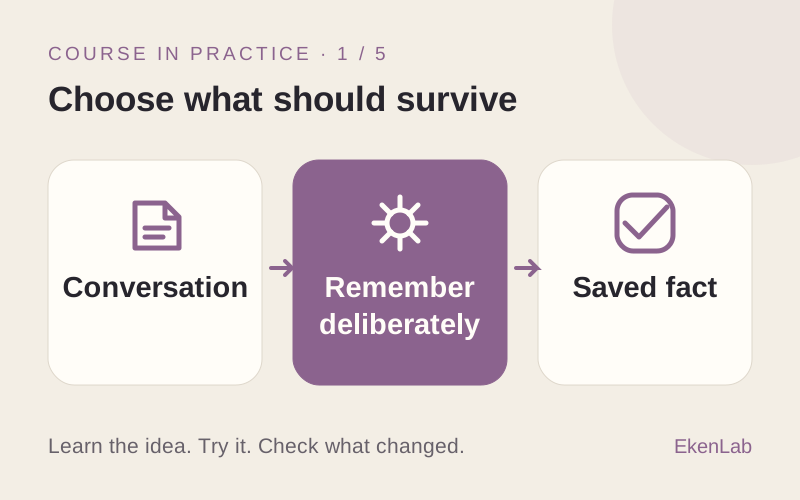
  1. Find what should survive

    What you’ll do
    Choose information that needs to survive between sessions.
    What you’ll have
    A specific reason to use memory and a way to check it.
  2. Store a deliberate memory

    What you’ll do
    Save a deliberate fact and inspect what was stored.
    What you’ll have
    A memory you can identify and verify.
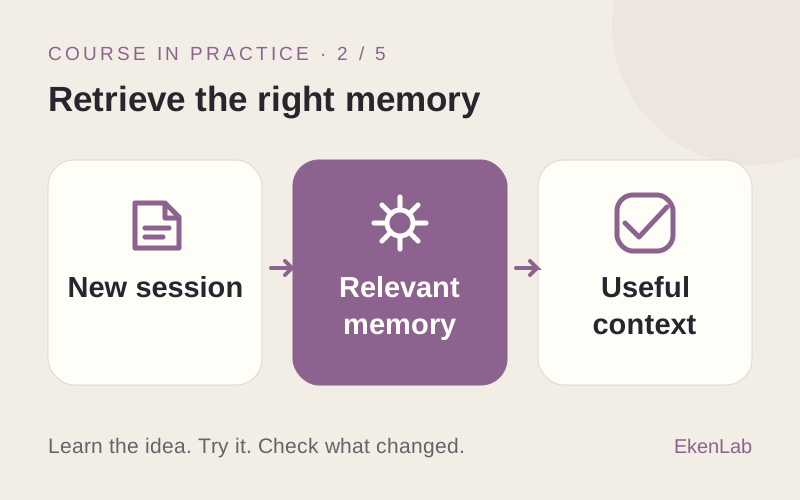
  3. Retrieve what matters

    What you’ll do
    Start a fresh session and check which saved information is used.
    What you’ll have
    Evidence of relevant information being retrieved.
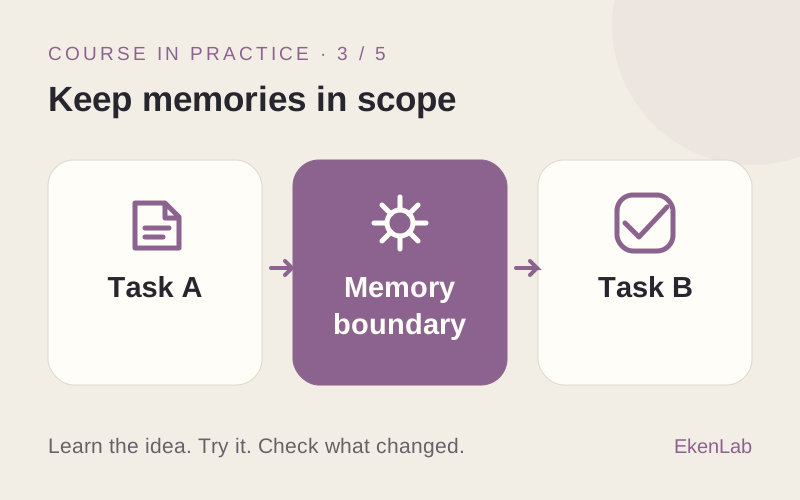
  4. Keep the right boundaries

    What you’ll do
    Test what one task or user can retrieve from another context.
    What you’ll have
    Defined memory boundaries and observed test results.
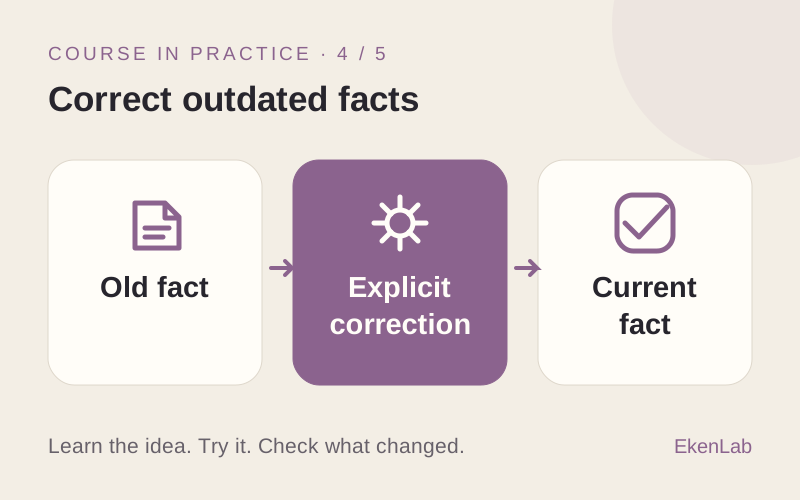
  5. Replace an outdated fact

    What you’ll do
    Correct a saved fact and check the answer in a new session.
    What you’ll have
    A verified correction rather than two conflicting facts.
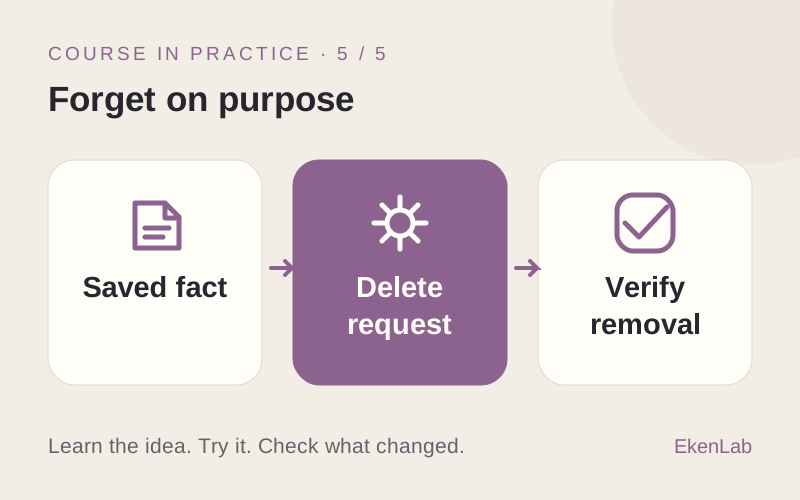
  6. Forget on purpose

    What you’ll do
    Request deletion and check whether the fact can still be retrieved.
    What you’ll have
    A deletion result you have tested.
  7. Test whether memory helps

    What you’ll do
    Compare the same task with and without memory.
    What you’ll have
    Evidence of whether memory helps your task.
  8. Carry memory responsibly

    What you’ll do
    Package the agent and test it on fresh input.
    What you’ll have
    A reusable project with storage, correction and deletion rules.

BEFORE YOU START

Know your
next step.

Not sure? Ask the AI advisor →

Before you try

  • Free on this website: read every course program and get up to 10 guest replies from the course advisor. No sign-up required.
  • In the app: sign in to try the introduction and first 2 learning phases free. No card required.
  • Before continuing: subscribe to continue beyond the free phases. Check current plans in the app. External provider costs are separate.

Guest advice and the free learning phases are separate. Neither includes the full course or free external tools.

What happens when I select “Try for free”?

You’ll open Give Your Agent Memory in the app. Sign in or create an account if asked. Try the introduction and first 2 learning phases free. No card required. Subscribe to continue.

What will I practice beyond prompting?

Deliberate storage, relevant retrieval, user/task boundaries, correction, deletion and tests showing whether memory helps.

Will my advisor conversation move with me?

Your guest conversation stays on this website. It is not transferred to your app account. Bring your task and any useful notes when you start.

YOUR NEXT STEP

Ready to put
this skill to work?

Try for free

Sign in to try the introduction and first 2 learning phases free. No card required. Subscribe to continue.